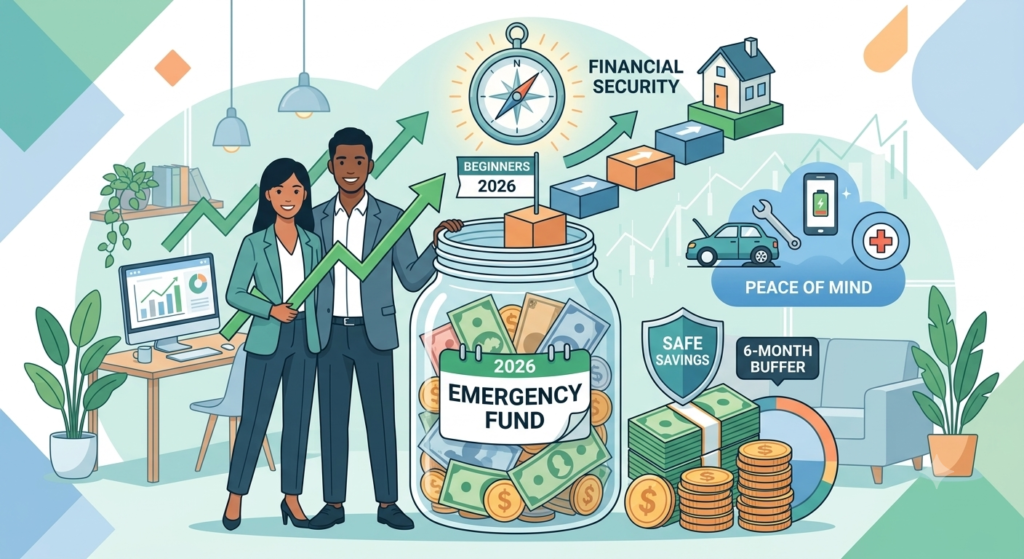
Building an Emergency Fund Financial Planning for Beginners 2026
1. What is an Emergency Fund?
An emergency fund is a dedicated pool of money set aside strictly for unpredictable, critical life events—such as sudden job loss, medical emergencies, or urgent repairs.
📋 Table of Contents
It is not a savings pot for your wants. It should be entirely isolated from money you use for routine lifestyle expenses like eating out, buying clothes, or upgrading your phone.

2. How Big Should It Be?
The general rule of thumb is to save 6 to 12 months’ worth of your essential monthly expenses (not your total monthly salary).
The Formula:
Emergency Fund=Monthly Essential Expenses × (6 to 12)
Essential expenses include only what you absolutely need to survive and meet your legal obligations:
- Loan EMIs
- Rent & Utilities (Electricity, Water, Internet)
- Food & Groceries
- Basic insurance premiums
Example Breakdown:
If your monthly salary is ₹25,000, but your actual survival expenses look like this:
- Rent/Utilities: ₹4,000
- Loan EMIs: ₹5,000
- Food/Basic Expenses: ₹5,500
- Total Essentials: ₹14,500 / month
Your emergency fund targets would be:
- 6-Month Target: 14,500×6 = ₹87,000
- 12-Month Target: 14,500×12= ₹1,74,000

3. Where Should You Keep It? (The Allocation Strategy)
Based on the transcript you shared, here is a clean, simplified, and practical breakdown of how to build and structure your emergency fund. You shouldn’t keep all your emergency money in one place. If it’s too easy to access, you might spend it; if it’s too locked up, you can’t use it in a crisis. The video recommends a split approach to maximize liquidity and beat inflation:
| Allocation | Asset Type | Purpose & Access |
| 10% to 20% | Cash / Savings Account | Instant Access: Kept in your bank account with a debit card for immediate midnight emergencies or cash withdrawals. |
| 70% to 80% | Liquid Mutual Funds | Inflation Protection: Earns a stable 5% to 7% return with zero exit load. Money can be pulled back into your bank account within 24 business hours. |
The Credit Card Hack: If a sudden crisis hits, you can use a credit card to pay for it immediately. While you are using the card, you initiate a withdrawal from your Liquid Mutual Fund. The fund proceeds will hit your bank account within 24 hours, allowing you to pay off the credit card bill instantly without accruing interest.
4. Golden Rules for Building Your Fund
- Pause Your Investments Temporarily: If you don’t have an emergency fund, stop putting money into high-risk assets like stocks, crypto, or smallcases. Build your safety net first; otherwise, a market crash combined with a personal emergency will force you to sell your investments at a massive loss.
- Out of Sight, Out of Mind: Open a completely separate bank account strictly for this fund. Automate a transfer to this account the day your salary hits. Treat your “available” salary as your total income minus this emergency contribution.
- Redirect Windfalls: Whenever you get an unexpected bonus, a cash gift, or a payout from an old fixed deposit, route it directly into your emergency fund to build it faster.
- Never Risk this Money: Never invest your emergency fund into real estate (highly illiquid), gold, or volatile crypto markets. The priority for this money is safety and instant availability, not high returns.
- MTAR Technologies Stock Decline 2026
- KFin Technologies IPO: Business Model, Financials & Growth Potentia
- How Much Money Do You Need to Retire in India?
- SIP vs Lump Sum: A Clear Comparison 2026
- Best Investment Apps In USA 2026
More Info-Google